
A Beginner’s Guide
Every organization runs projects – but not every organization manages them strategically. As companies grow, so does the complexity of managing multiple initiatives, allocating limited resources, and ensuring that everything contributes to overarching business goals.
That’s where Project Portfolio Management (PPM) comes in.
PPM is more than just organizing projects – it’s a structured, top-down approach to evaluating, prioritizing, and overseeing all projects and programs across the enterprise. When done right, PPM ensures that every initiative is aligned with strategy, delivered efficiently, and contributes measurable value to the business.
This beginner’s guide covers the basics of PPM, why it matters, and how modern tools are helping organizations manage portfolios more effectively than ever.
What is Project Portfolio Management (PPM)?
Project Portfolio Management is the centralized management of an organization’s projects, programs, and initiatives. Rather than treating each project in isolation, PPM views them as a unified portfolio that must be optimized based on strategic goals, available resources, budget, risk, and expected value.
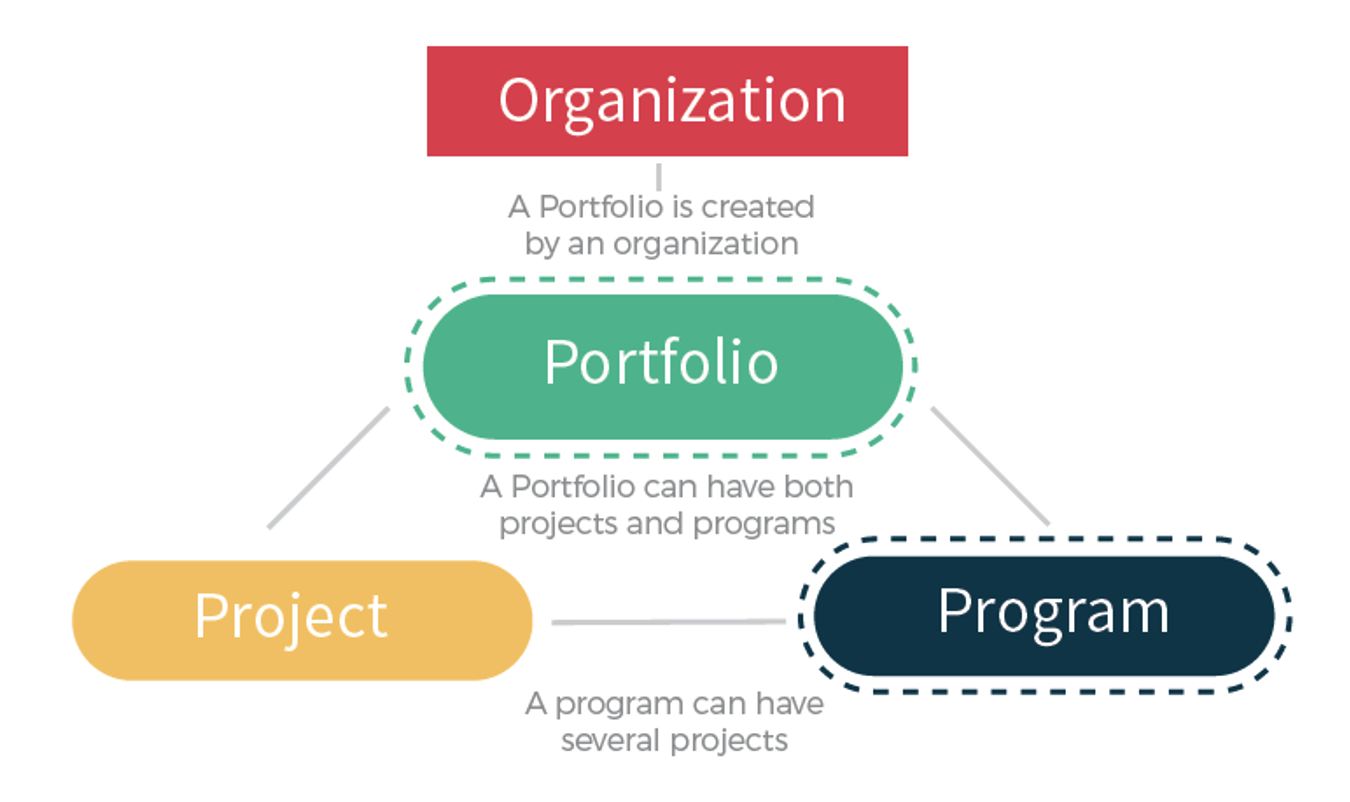
What-is-project-portfolio-management-blog-post-image-1-bubble-ppm-software
Figure 1: Project and Portfolio Management focuses on the collective performance of all projects and their connections to strategy
In short, PPM is about doing the right projects – not just doing projects right. At its core, project portfolio management involves:
- Selecting the right projects based on strategic alignment and business value
- Prioritizing initiatives based on criteria such as ROI, urgency, or risk
- Allocating resources to ensure high-impact work is adequately supported
- Monitoring performance across the portfolio to ensure delivery is on track
- Adapting the portfolio as business conditions and priorities change
PPM vs. Project Management: What’s the difference?
While they’re often used interchangeably, project management and project portfolio management serve very different functions.
Project Management (PM):
- Focuses on individual project delivery
- Concerned with time, scope, and cost
- Operated by project managers
- Tactical execution
Project Portfolio Management (PPM):
- Focuses on the collective performance of all projects
- Concerned with strategic alignment and value
- Operated by PMOs, executives, or portfolio managers
- Strategic oversight
Think of project managers as the builders of each house, and PPM as the architect overseeing the entire neighborhood’s development. Both are necessary – but only one ensures everything fits the bigger picture.
Why PPM matters more than ever?
Organizations today are investing in digital transformation, operational efficiency, and innovation. These strategic priorities are delivered through projects – but without a portfolio-level view, it’s easy to lose track of what’s actually being accomplished.
Here’s why PPM is increasingly vital for growing organizations:
- Too many projects, not enough resources: PPM helps you focus on the highest-impact work.
- Disjointed efforts: PPM ensures alignment across departments, avoiding duplication or misdirection.
- Lack of transparency: With PPM, leadership has real-time visibility into performance and risk.
- Changing priorities: PPM makes it easier to shift resources and re-prioritize without chaos.
Ultimately, PPM turns project delivery into a strategic advantage, not just an operational activity.
Key components of Project Portfolio Management
Understanding the core elements of PPM can help teams and leaders adopt the right practices – and the right tools. Here are the main components:

1. Project intake and evaluation
New project ideas are submitted and evaluated against a consistent framework. This often includes business case analysis, resource needs, and alignment with strategic objectives.
2. Prioritization and selection
Not every idea becomes a project. PPM uses scoring models and decision criteria to select only the most valuable initiatives for execution.
3. Resource and capacity planning
PPM helps match demand to available capacity – ensuring that teams aren’t overcommitted and that critical projects aren’t delayed due to resource gaps.

4. Portfolio monitoring and reporting
Active projects are tracked for performance, budget, timeline, and risk. Dashboards and reports provide executive visibility across the entire portfolio.

5. Governance and compliance
PPM systems enforce policies and approval workflows, ensuring accountability and reducing risks related to scope, cost, or non-compliance.

6. Portfolio optimization
As priorities shift, PPM helps organizations re-balance their portfolio – pausing, accelerating, or redirecting initiatives based on real-time data.
The role of PPM software
Managing a project portfolio manually – especially with spreadsheets or disconnected systems – can quickly become overwhelming. That’s why more organizations are investing in PPM software to automate and streamline portfolio processes.
Modern PPM platforms offer:
- A centralized view of all projects and programs
- Real-time dashboards for performance and progress
- Strategic alignment tools to map projects to goals
- Resource planning and forecasting capabilities
- Scenario modeling to support better decision-making
- Governance frameworks for approvals and compliance
With the right tool in place, organizations can confidently scale project delivery, drive better decisions, and maximize the return on their investments.
Who uses PPM software
PPM is typically championed by the Project Management Office (PMO), but its benefits extend across the organization. Common users include:
- Executives looking for visibility and alignment
- Portfolio managers overseeing cross-functional initiatives
- Finance teams monitoring budgets and investments
- IT leaders managing technology and transformation programs
- Project managers delivering work within defined constraints
No matter the industry, the goal is the same: ensure projects deliver value, not just outputs.
Ready to manage projects more strategically?
Project Portfolio Management isn’t just for large enterprises – it’s a critical discipline for any organization that wants to grow with purpose. By aligning projects with strategy, optimizing resources, and improving visibility, PPM helps organizations deliver the right work, at the right time, for the right reasons.
Use any of the links below to explore our PPM solution and see how your team can manage portfolios with clarity, confidence, and control – right from the start.


Deliver greater value from your projects and portfolios
Turbocharge productivity in your organization
About Bubble
Bubble® is a leading software company specialized in the development of Enterprise Project Management and Project Portfolio Management (PPM) solutions. Our cloud-based PPM software, Bubble PPM, helps organizations in Innovation, R&D, New Product Development, and other disciplines, to select the right projects, execute them reliably, and improve productivity.
Founded in 1999, the company is Headquartered in the UK, serving customers across the globe via our offices in Cambridge, London, and Melbourne.
About Bubble
Bubble® is a leading provider of Project and Portfolio Management software. Founded in 1999, the company serves clients globally via offices in London, Cambridge, and Melbourne.
Its cloud-based solutions help customers improve the planning, governance, and delivery of Innovation, New Product Development, Engineering, IT, and other initiatives.